
Leaf Tenmoku Glaze

Leaf-Inlaid Tenmoku Glaze — Mug 3
Leaf-Patterned Tenmoku Glaze is a type of black-glazed porcelain originating from the Jizhou Kiln of the Southern Song Dynasty. Its uniqueness lies in fusing the ash of mulberry or bodhi leaves with black glaze through high-temperature firing, forming off-white vein-like patterns. The core of this craftsmanship involves placing processed leaves on glazed ceramic bodies, which are then fired at a high temperature of approximately 1,300°C. This causes the leaf ash to blend into the glaze, creating a "leaf vein" decorative effect that stands in striking contrast to the black glaze.
Leaf-Patterned Tenmoku Glaze was exported overseas during the Song and Yuan dynasties. In the 1980s, the long-lost ancient techniques for producing it were successfully reproduced, and it has now been listed as a National Intangible Cultural Heritage.


Leaf-Inlaid Tenmoku Glaze —Acer rubrum leaf Mug
Leaf-Patterned Tenmoku Glaze is a type of black-glazed porcelain originating from the Jizhou Kiln of the Southern Song Dynasty. Its uniqueness lies in fusing the ash of mulberry or bodhi leaves with black glaze through high-temperature firing, forming off-white vein-like patterns. The core of this craftsmanship involves placing processed leaves on glazed ceramic bodies, which are then fired at a high temperature of approximately 1,300°C. This causes the leaf ash to blend into the glaze, creating a "leaf vein" decorative effect that stands in striking contrast to the black glaze.
Leaf-Patterned Tenmoku Glaze was exported overseas during the Song and Yuan dynasties. In the 1980s, the long-lost ancient techniques for producing it were successfully reproduced, and it has now been listed as a National Intangible Cultural Heritage.


Leaf-Inlaid Tenmoku Glaze—- Leaf Mug 1
Leaf-Patterned Tenmoku Glaze is a type of black-glazed porcelain originating from the Jizhou Kiln of the Southern Song Dynasty. Its uniqueness lies in fusing the ash of mulberry or bodhi leaves with black glaze through high-temperature firing, forming off-white vein-like patterns. The core of this craftsmanship involves placing processed leaves on glazed ceramic bodies, which are then fired at a high temperature of approximately 1,300°C. This causes the leaf ash to blend into the glaze, creating a "leaf vein" decorative effect that stands in striking contrast to the black glaze.
Leaf-Patterned Tenmoku Glaze was exported overseas during the Song and Yuan dynasties. In the 1980s, the long-lost ancient techniques for producing it were successfully reproduced, and it has now been listed as a National Intangible Cultural Heritage.


Leaf-Inlaid Tenmoku Glaze—- Leaf Mug 2
Leaf-Patterned Tenmoku Glaze is a type of black-glazed porcelain originating from the Jizhou Kiln of the Southern Song Dynasty. Its uniqueness lies in fusing the ash of mulberry or bodhi leaves with black glaze through high-temperature firing, forming off-white vein-like patterns. The core of this craftsmanship involves placing processed leaves on glazed ceramic bodies, which are then fired at a high temperature of approximately 1,300°C. This causes the leaf ash to blend into the glaze, creating a "leaf vein" decorative effect that stands in striking contrast to the black glaze.
Leaf-Patterned Tenmoku Glaze was exported overseas during the Song and Yuan dynasties. In the 1980s, the long-lost ancient techniques for producing it were successfully reproduced, and it has now been listed as a National Intangible Cultural Heritage.
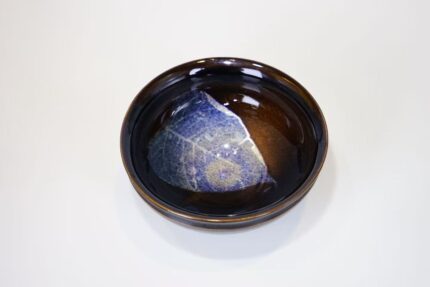
Leaf-Inlaid Tenmoku Glaze—- Teacup 1
Leaf-Patterned Tenmoku Glaze is a type of black-glazed porcelain originating from the Jizhou Kiln of the Southern Song Dynasty. Its uniqueness lies in fusing the ash of mulberry or bodhi leaves with black glaze through high-temperature firing, forming off-white vein-like patterns. The core of this craftsmanship involves placing processed leaves on glazed ceramic bodies, which are then fired at a high temperature of approximately 1,300°C. This causes the leaf ash to blend into the glaze, creating a "leaf vein" decorative effect that stands in striking contrast to the black glaze.
Leaf-Patterned Tenmoku Glaze was exported overseas during the Song and Yuan dynasties. In the 1980s, the long-lost ancient techniques for producing it were successfully reproduced, and it has now been listed as a National Intangible Cultural Heritage.

Leaf-Inlaid Tenmoku Glaze—- Teacup 2
Leaf-Patterned Tenmoku Glaze is a type of black-glazed porcelain originating from the Jizhou Kiln of the Southern Song Dynasty. Its uniqueness lies in fusing the ash of mulberry or bodhi leaves with black glaze through high-temperature firing, forming off-white vein-like patterns. The core of this craftsmanship involves placing processed leaves on glazed ceramic bodies, which are then fired at a high temperature of approximately 1,300°C. This causes the leaf ash to blend into the glaze, creating a "leaf vein" decorative effect that stands in striking contrast to the black glaze.
Leaf-Patterned Tenmoku Glaze was exported overseas during the Song and Yuan dynasties. In the 1980s, the long-lost ancient techniques for producing it were successfully reproduced, and it has now been listed as a National Intangible Cultural Heritage.
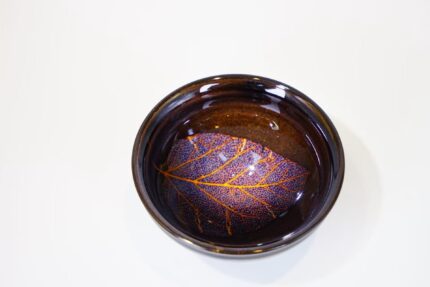

Leaf-Inlaid Tenmoku Glaze—- Teacup 3
Leaf-Patterned Tenmoku Glaze is a type of black-glazed porcelain originating from the Jizhou Kiln of the Southern Song Dynasty. Its uniqueness lies in fusing the ash of mulberry or bodhi leaves with black glaze through high-temperature firing, forming off-white vein-like patterns. The core of this craftsmanship involves placing processed leaves on glazed ceramic bodies, which are then fired at a high temperature of approximately 1,300°C. This causes the leaf ash to blend into the glaze, creating a "leaf vein" decorative effect that stands in striking contrast to the black glaze.
Leaf-Patterned Tenmoku Glaze was exported overseas during the Song and Yuan dynasties. In the 1980s, the long-lost ancient techniques for producing it were successfully reproduced, and it has now been listed as a National Intangible Cultural Heritage.
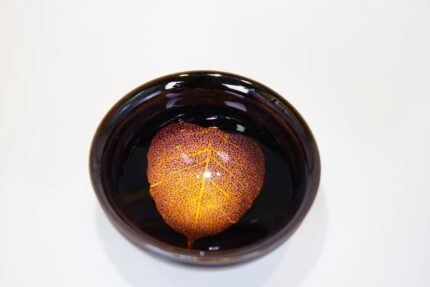
Leaf-Inlaid Tenmoku Glaze—- Teacup 4
Leaf-Patterned Tenmoku Glaze is a type of black-glazed porcelain originating from the Jizhou Kiln of the Southern Song Dynasty. Its uniqueness lies in fusing the ash of mulberry or bodhi leaves with black glaze through high-temperature firing, forming off-white vein-like patterns. The core of this craftsmanship involves placing processed leaves on glazed ceramic bodies, which are then fired at a high temperature of approximately 1,300°C. This causes the leaf ash to blend into the glaze, creating a "leaf vein" decorative effect that stands in striking contrast to the black glaze.
Leaf-Patterned Tenmoku Glaze was exported overseas during the Song and Yuan dynasties. In the 1980s, the long-lost ancient techniques for producing it were successfully reproduced, and it has now been listed as a National Intangible Cultural Heritage.