


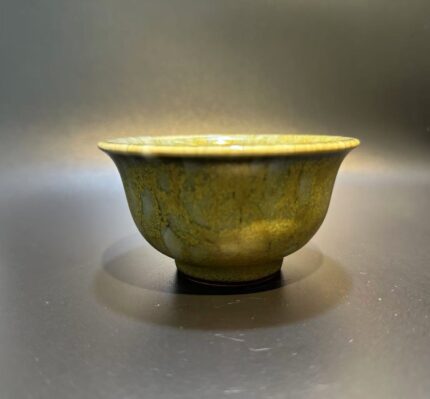
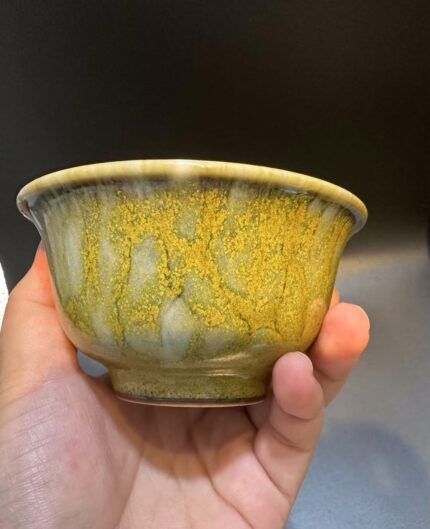
Tortoiseshell porcelain features a black glaze as its base, accompanied by amber-colored streaks. Its glaze surface shimmers faintly in dim tawny yellow hues, with patterns flowing naturally—resembling deep-sea seaweed or nighttime fireworks. Its dark, muted tones and thick, substantial texture are praised as “the beauty of ‘sea gold'”, making it a cherished treasure pursued by ancient literati and refined scholars. Due to the rich variations in its patterns, it exhibits a typical kiln transformation effect.
Tortoiseshell porcelain is a type of noble porcelain derived from tortoiseshell products. When it comes to tortoiseshell products, only the royal family and high-ranking officials could use them during the Tang Dynasty. In the Song Dynasty, they became accessible to noblewomen in the imperial court, literati and refined scholars, as well as local officials. Thus, some people extended this elegant and noble beauty of tortoiseshell to porcelain. In the tea competition culture of the Song Dynasty, tortoiseshell tea bowls were a staple item at gatherings of literati. They were exported far and wide overseas and even became national treasures of Japan.
Tortoiseshell, with its shell patterns, was endowed with the meanings of “longevity, wealth, and auspiciousness”, and became an exclusive ornament for ancient royal families and nobles. Therefore, tortoiseshell porcelain is also regarded as a symbol of longevity, wealth, and auspiciousness.
Tortoiseshell porcelain is listed as a national treasure-level cultural relic in Japan and is also part of the British Museum’s collection. In 2018, a Yuan Dynasty tortoiseshell tea bowl sold for 4.62 million RMB, which reflects its collection value.
There are many porcelain enthusiasts who collect tortoiseshell porcelain. They also use it as decorations at home or in the office, or even put it into daily use, bringing a unique feeling to people.
The process of making porcelain is extremely complex, with approximately 72 steps.
If a customer wants to customize a LOGO, an additional 3-4 steps will be added.
Clay Material : Gaobai Clay, a type of high-quality, high-purity clay.
Glaze: Raw Glaze
Temperatura: over 1300 celsius






Reviews
There are no reviews yet.